
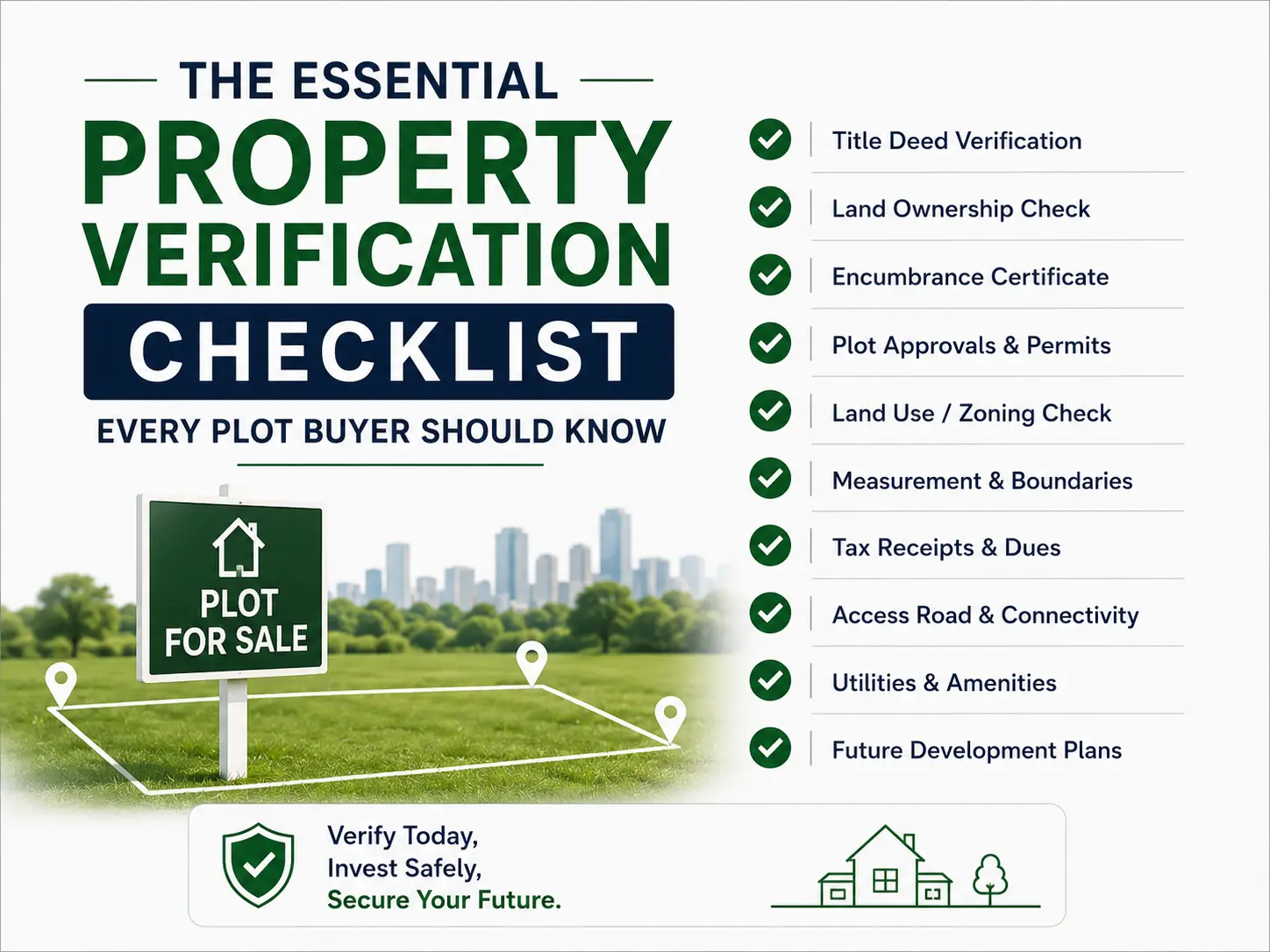
Before investing in any residential plot, understanding the property's legal and documentation status is just as important as evaluating its location and price. Proper verification helps buyers gain confidence, make informed decisions, and better understand the asset they are purchasing. This guide explores the key aspects every plot buyer should know before making a real estate investment.
Purchasing a residential plot is one of the most significant financial decisions a person can make. Whether the objective is building a future home, securing a long-term investment, or creating a valuable asset for future generations, every buyer deserves confidence in their purchase.
Before investing in any property, it is important to understand the legal and documentation aspects associated with the plot. Proper verification helps buyers make informed decisions and gain clarity regarding the property's ownership and legal status.
“A confident investment begins with proper verification.”
— SVM Land PromotersReal estate transactions involve long-term commitments and substantial financial planning. Taking the time to verify important property details allows buyers to better understand the asset they are purchasing.
Property verification is not simply a legal formality—it is an essential part of responsible property ownership and investment planning.
One of the first steps in property verification is reviewing ownership records. Buyers should understand who currently owns the property and whether ownership documentation is properly maintained.
Clear ownership information helps establish confidence and supports a transparent transaction process.
An Encumbrance Certificate (EC) is commonly reviewed during property verification. This document helps provide information regarding registered transactions associated with a property over a specified period.
Reviewing relevant records can help buyers gain a better understanding of the property's transaction history.
Approved layouts often provide greater confidence to both buyers and financial institutions. Layout approvals indicate that the development has undergone the necessary review process by the relevant authorities.
When purchasing a residential plot, understanding the approval status of the project is an important step in the decision-making process.
Parent documents provide historical ownership information relating to a property. Reviewing these records helps establish continuity in ownership history and contributes to a clearer understanding of the property's background.
Buyers often consult legal professionals to review documentation and provide guidance regarding property records.
Property verification extends beyond paperwork. Buyers should also understand the physical characteristics of the plot, including access roads, site boundaries, and surrounding development.
Visiting the property location and reviewing site conditions can help buyers align their investment decisions with their future plans.
A property's location plays a major role in its future usability and residential appeal. Buyers often evaluate connectivity, nearby infrastructure, transportation access, educational facilities, healthcare services, and employment opportunities.
A well-connected location supported by ongoing development initiatives can contribute positively to long-term planning objectives.
Patta and other revenue-related records are commonly reviewed as part of the property verification process. These records help provide information regarding land classification and ownership-related details.
Understanding available records contributes to greater transparency and supports informed decision-making.
Property documentation can sometimes appear complex, especially for first-time buyers. Seeking guidance from experienced professionals can help buyers understand important documents, approval processes, and verification requirements.
Professional support often simplifies the process and helps buyers move forward with greater confidence.
Many buyers focus primarily on location and pricing while overlooking verification procedures. While these factors are important, proper documentation review should never be ignored.
Taking a systematic approach to verification can help buyers make informed property decisions.
Today's property buyers are increasingly informed and research-driven. Transparency has become one of the most important factors influencing purchase decisions.
Clear communication, accessible documentation, and responsible business practices contribute significantly to building customer confidence.
At SVM Land Promoters, we believe informed buyers make confident investors. Our approach focuses on transparency, customer guidance, and helping buyers understand important aspects of property ownership.
We assist customers by providing clear information regarding project details, documentation processes, and important considerations associated with residential plot purchases.
Our goal is not simply to sell plots but to help customers make well-informed decisions that align with their long-term goals and future aspirations.
Over the years, SVM Land Promoters has earned customer trust through transparency, responsible guidance, and a commitment to customer satisfaction.
These milestones reflect our dedication to helping families and investors move forward with confidence.
Property verification is one of the most important steps in any real estate investment journey. Understanding ownership records, approvals, documentation, and location factors can help buyers make informed decisions and gain greater confidence in their investment.
At SVM Land Promoters, we believe transparency and customer guidance are essential to responsible property ownership. Through trusted projects, clear communication, and a commitment to helping customers understand the buying process, we continue to support families and investors in achieving their real estate goals.
Because every successful property investment begins with informed decision-making.